
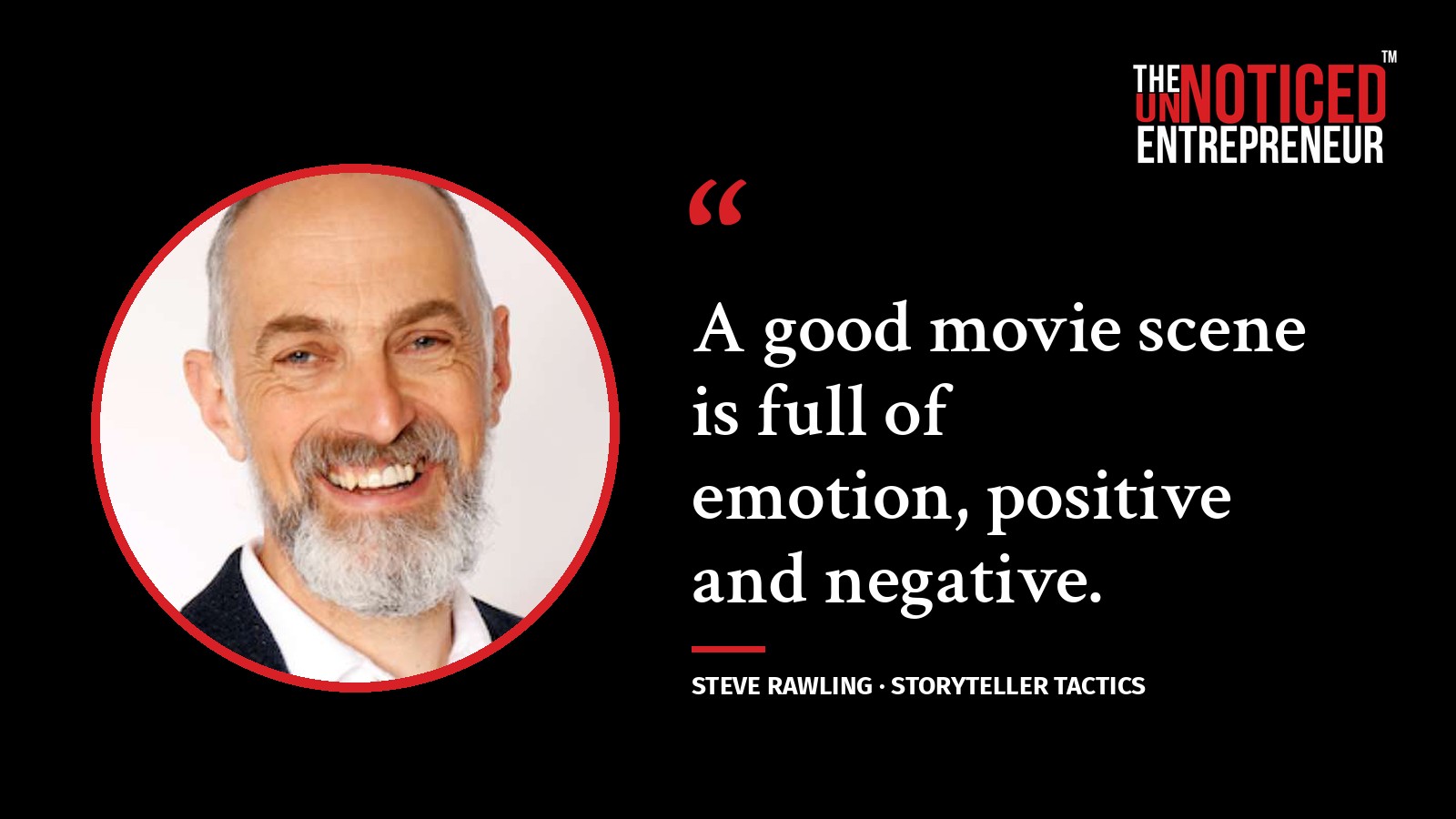
From The UnNoticed Entrepreneur archive: Jim James talks to Steve Rawling, creator of the Storyteller Tactics card deck, in the north of England. Published March 2025.
In two minutes
- Most business stories don’t need a hero’s journey. You need lots of small “moment” stories, and you start by listening.
- Steve’s “Movie Time” recipe: action, emotion, meaning.
- Using that same recipe, a 20-episode email soap opera helped the deck raise over £100,000 on Kickstarter in 147 minutes, according to the episode notes.
Listen to the episode
From BBC newsroom to card deck
Steve spent 20 years in BBC television news, judging dozens of stories a day. Colleagues knew instantly what made a story, but nobody could explain why. When he was asked to help charities tell better stories, he finally read the theory, got hooked, and later left journalism to train and coach.
In lockdown, tired of hunting through his own PDFs and slides, he organised his techniques as cards. A week later, someone who publishes training card decks called to ask for a storytelling set. Six months later there was a deck of 54 cards: Storyteller Tactics, from Pip Decks.
Small stories beat big journeys
Steve is suspicious of 12-stage hero’s journeys. “I’m trying to sell cheese… where is the hero refusing the call to adventure?” Most of the time, he says, you need short example stories that work as social proof.
And a well-worn life story shows. When someone runs through a rehearsed story “on rails”, it becomes a monologue and the listener feels irrelevant.
Start by listening. In conversation, find out about the other person and listen for a point of similarity, then drop in a short, relevant story: “I helped someone with a problem like that…” Even for a presentation, ask first who’s in the room and what they need.
The Movie Time recipe
Take a bland message like “we go above and beyond for customers” and follow it with two magic words, “for example”. Then:
- Action. Directors shout “action”, not “strategy”. Give people a scene a camera could film: people, a time, a place. Listeners can’t help running the movie in their heads.
- Emotion. This is the bit business people leave out. It reveals motivation, and people remember the moments they felt something.
- Meaning. Say why you told the story.
Steve’s example: an Estonian engineer told him, “We don’t do emotions.” Steve asked about a time one of his machines broke down, and the engineer was straight back in the moment with an angry customer in Norway. The meaning: everyone has stories. Ask engineers about something that broke and how they fixed it.
Keep a story bank. Three words (“emotional Estonian engineer”) are enough to bring a story back. Note who told you, whether it was confidential and who you’ve already told.
How the Kickstarter took off
Before launch, the team sent around 20 short email episodes: a soap opera. Each told a 200-word story about a likely customer (a UX designer, a data analyst, a project lead), then explained which tactic was used to write it, with a link to the full tactic free on the website. That built trust, showed the product working, and created indexable content. The aim was to fund in three days. It took 147 minutes.
It wasn’t cheap in time: writing, plus an illustrator. And AI, Steve says, can’t tell your story. Authenticity comes from what you did and felt.
What they didn’t anticipate
Some buyers spread the cards out like a tarot reading and loved it. Others wanted “step one, step two, step three”. The fix was getting-started blog posts, step-by-step case studies, a customer Slack and free webinars. There will always be someone who asks, “But how do I do it?”
The business model: Pip Decks / Storyteller Tactics
- Customer: professionals and teams who need to communicate persuasively.
- Problem it solves: storytelling advice that’s too abstract or too long to use.
- How it makes money: physical and digital card decks, funded first through Kickstarter, with training around them.
- How it wins customers: free tactics online, a free five-card starter pack, and serialised email stories.
- The pattern: package expertise as a tool people can pick up, and give generous samples away.
Lessons you can use
- Swap your one big story for many small ones.
- Listen first, then tell the story that matches.
- Use action, emotion, meaning.
- Sell with your product. Show the method working in your marketing.
- Look backwards as well as forwards. Repeat business and referrals from old customers are the easiest money you’ll make.
Try this this week
- Take one generic claim on your website and add “for example” plus a 100-word Movie Time story.
- Start a story bank: list five moments from your business, three words each.
- Email three past customers this week.
Storyteller Tactics: pipdecks.com (free five-card starter pack available)


Leave a Reply