

By Jim James. A behind-the-scenes look at how this magazine is now made, and why.
In two minutes
- Our bottleneck was 500+ founder interviews locked in audio. Turning each one into an article meant moving work by hand from app to app.
- MCP, an open standard that lets an AI assistant work inside your apps, removed it. Claude now works across Buzzsprout, WordPress and Zoho Social.
- AI does the heavy lifting; I set the rules. Every quote is checked against the transcript, and nothing is invented.
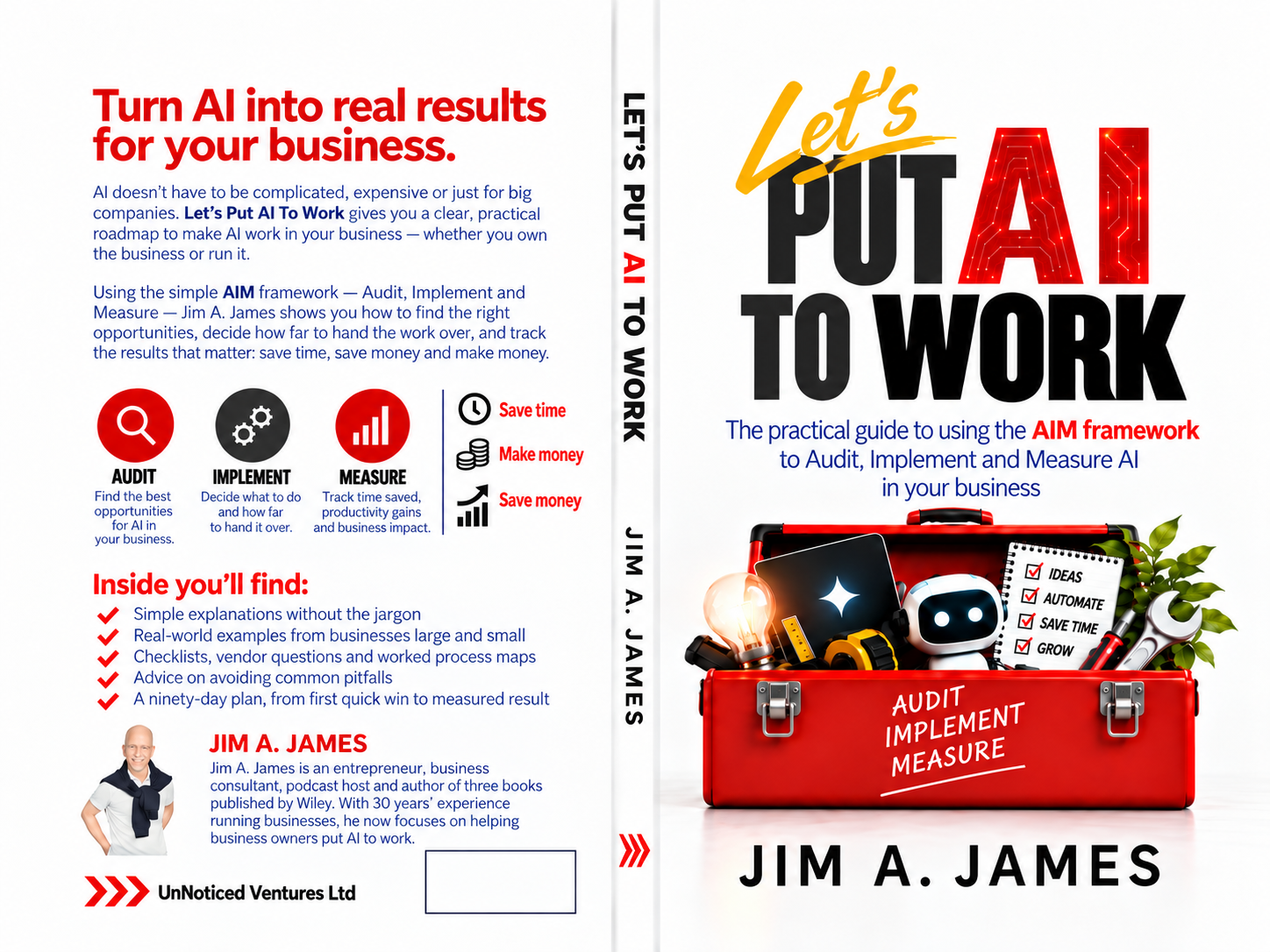
In my book Let’s Put AI to Work, I make one simple point: don’t start with the tool. Find the bottleneck first, then ask whether AI can remove it.
This week I took my own advice.
The bottleneck
Since 2019 I’ve recorded more than 500 conversations with founders on The UnNoticed Entrepreneur. They’re full of hard-won lessons about getting noticed, winning customers, raising money and selling businesses.
But they were locked in audio. You can’t skim a podcast. You can’t search it easily, and you can’t quote it in a hurry. Turning one episode into a proper article meant downloading the transcript, writing it up, finding a photo, building the page in WordPress and then sharing it. That’s five or six apps, with me as the glue between them. So it rarely happened.
What MCP is, in plain English
MCP stands for Model Context Protocol. It’s an open standard that lets an AI assistant connect to the apps you already use, read from them and take actions in them, with your permission.
The easiest way to think of it is USB-C for AI: one plug, every app. Before MCP, an AI could only work with whatever you pasted into the chat. With MCP, it can go and fetch the episode itself, write the article and put it on the website.

What we connected
- Buzzsprout, where the podcast lives: episodes, transcripts, download numbers and episode artwork.
- Claude, the AI that reads, writes and checks.
- WordPress, this magazine.
- Zoho Social, for sharing to LinkedIn.
The process, step by step
- Pick. The most-listened interviews that haven’t been written up yet.
- Read. The full transcript, straight from Buzzsprout.
- Write. An article in our house style, in British English, using only what was said on the show.
- Check. Every quote, word for word, against the transcript.
- Design. A quote card for the guest, using their photo from our own episode artwork, so they have something they’ll want to share.
- Publish and prove it. The article goes live, and then the live page is loaded to confirm the summary, player and image are all there.
It tidied the archive too. Eighty old trailers and soundbites, short clips that cluttered the feed, were set to private. Nothing was deleted, so every change can be undone.

AI does the heavy lifting. I set the rules.
This is the part I care about most. An AI that writes fast but makes things up is a liability, especially when you’re putting words in real people’s mouths. So the rules are written down and followed on every run:
- Only what was said on the show.
- Every claim credited to the guest who made it.
- No invented quotes, numbers or links.
- Affiliate links always disclosed.
- Nothing deleted, and nothing emailed to subscribers or posted to social without my say-so.
Why we did it
To be found by AI. More people now ask ChatGPT, Claude or Perplexity instead of searching Google. Clear, well-structured articles give those assistants something to read and cite. This is what people call GEO and AEO: generative engine and answer engine optimisation.
To create new inventory for sponsors. Every article is another place a sponsor can be seen.
To serve the mission. I started this show to share entrepreneurs’ stories. Some people watch, some listen and some read. Now each story reaches all three.
To build one source of truth. Everything feeds Jim², my Delphi digital twin, which you’ll find on this site. Bring your own situation and ask what my guests would say.
One conversation, five places
Each interview now lives in five places: video on YouTube, audio on every podcast player, an article here in the magazine, posts and shorts on social, and, for the best stories, chapters in a book.
What I learnt
AI is a process, not a prompt. The value wasn’t in one clever instruction. It came from connecting the tools, writing the rules down and letting the work flow between them.
And automation amplifies whatever you point it at. Before you switch on a content machine, be clear what it’s for, and who it’s for.
Try this this week
- Write down the one task in your business where you’re the glue between apps.
- Check which of those apps already offer an MCP connection.
- Write your rules first: what the AI may do, what it must never do, and what needs your approval.
Want my guide to connecting your own apps with MCP? Comment “MCP Me” on my LinkedIn post, or ask Jim² here on the site.


Leave a Reply