
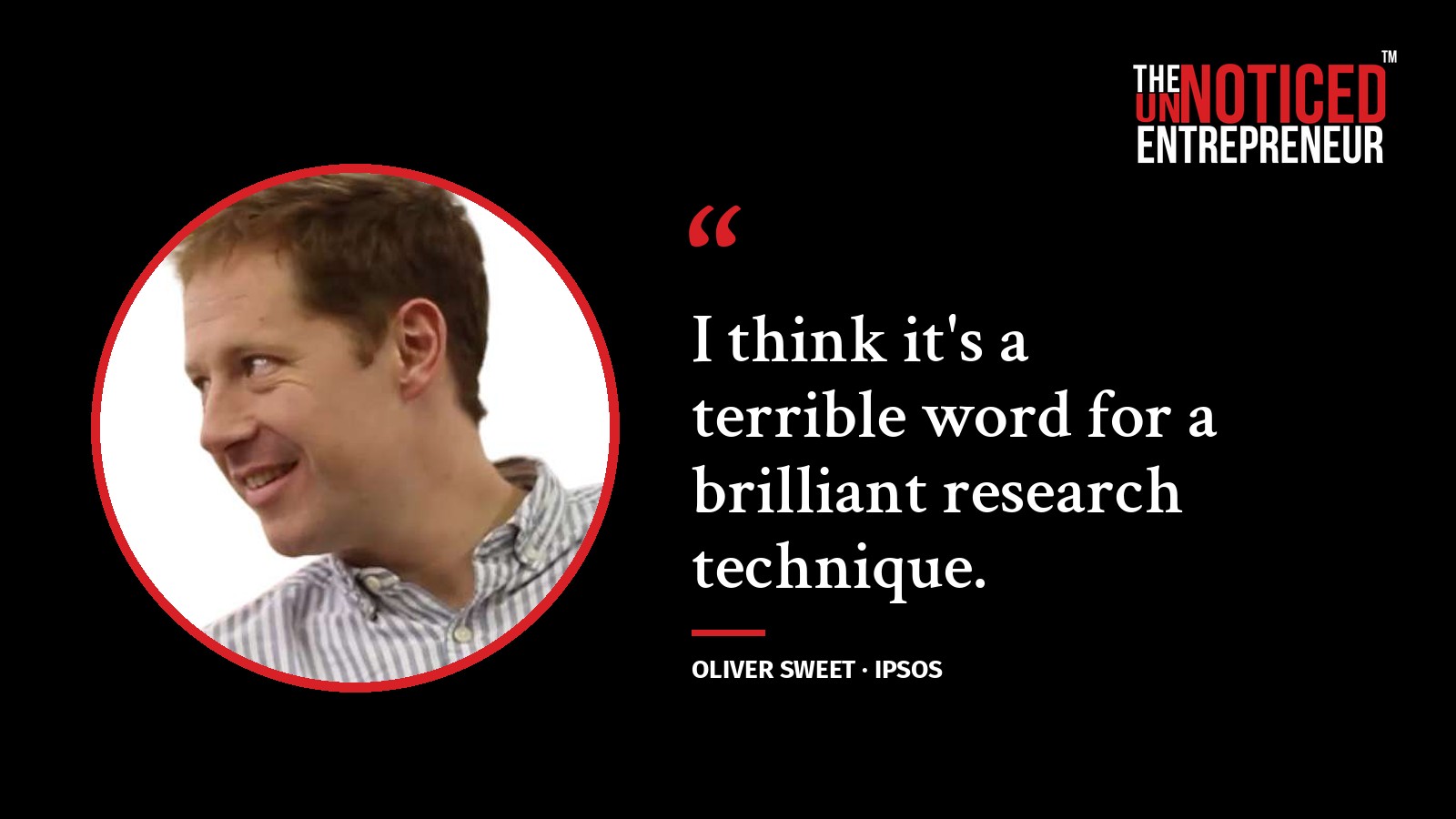
From The UnNoticed Entrepreneur archive: Jim James talks to Oliver Sweet, head of ethnography at Ipsos, in London. Published September 2023.
In two minutes
- Ethnography means spending time with customers where they are, and watching what they do, not just asking what they think.
- People don’t lie in surveys, Oliver says, but what they say and what they do can differ.
- Your brand doesn’t live in your head. It lives in the minds of the people who buy it, and that can be a gift.
Listen to the episode
Oliver calls ethnography “a terrible word for a brilliant research technique”. It literally means writing about people. In practice, it sits at the far end of research from surveys: you go and live a little of your customer’s life.
The youth centres that missed the point
An early project for Tower Hamlets council in London set out to get boys off the streets. The council had stocked youth centres with video games and pool tables, because that’s what the boys said they wanted. But the boys still didn’t come.
So Oliver’s team spent Friday and Saturday nights following them around. The boys weren’t out for games. They were going wherever the girls were. Once the centres offered things the girls wanted, the girls came, and so did the boys.
The drinks company that lost its theatre
A large spirits company’s business is, in effect, starting parties, and cocktails are its showpiece. Before the pandemic, watching a bartender perform was part of the joy, and nobody minded waiting.
After lockdown, bars reopened with table service and spread-out seating. The performance was gone, waits got longer, and bars pushed quick drinks: beer, wine, a simple spirit and mixer. The spirits company was being cut out. Spending time with bar staff showed why, so it promoted quick-serve cocktails that anyone could make fast. That helped the bars and put more spirits back into drinks.
The lesson: you may have the best product, but that may not be the job customers are trying to get done.
Jägermeister leaned in
Jägermeister began as a herbal digestif, drunk in Germany almost as a medicine. In a London bar at 11pm it’s a Jägerbomb. Instead of insisting that “this isn’t how our drink should be consumed”, the brand leaned in, with machines in bars and the same recognisable branding. Oliver says it has “gone through the roof” as a result.
How a small business can do this
You don’t need a research budget. The basics:
- Go to where people are, and see their life from their point of view.
- Leave your agenda at the door. “Do you like my product?” tells you nothing. Ask about their day, their stresses, their commute, their colleagues.
- Build a small group of super users. Talk to them regularly and informally about what they’re doing, not about your brand. Let them talk to each other too.
Beware the echo chamber
Remote working, Oliver warns, has pushed many of us deeper into echo chambers. We hear from people like us, and they’re only a small part of the market. Getting out and meeting people who are different is the antidote.
The business model: ethnographic research (Ipsos)
- Customer: large brands and public bodies.
- Problem it solves: the gap between what customers say and what they actually do.
- How it makes money: research projects, as part of Ipsos’s wider survey and qualitative research business.
- The pattern: sell insight that changes the product or the pitch, not just data.
Lessons you can use
- Watch, don’t just ask. Behaviour tells you what surveys miss.
- Find the real job to be done. It may be reducing stress, not buying the “best” product.
- Let customers redefine your brand. If they use it differently, consider leaning in.
- Get out of your bubble. Talk to people unlike you.
- Keep a standing group of super users.
Try this this week
- Spend an hour where your customers work or shop, and just observe.
- Interview three customers about their day, without mentioning your product.
- Write down how customers actually use your product. Is it what you designed it for?
Oliver Sweet: find him on LinkedIn as head of ethnography at Ipsos.


Leave a Reply