
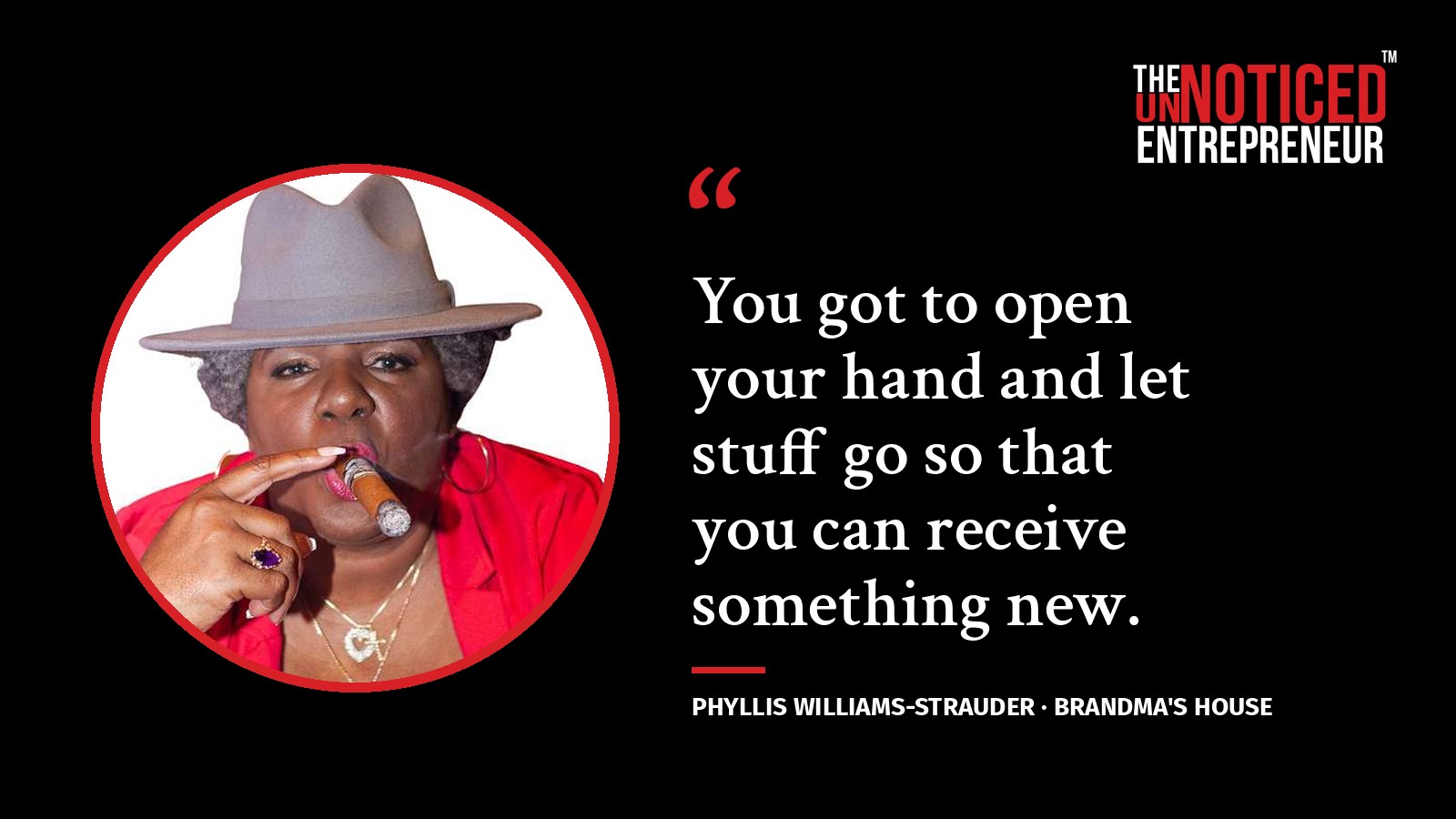
From The UnNoticed Entrepreneur archive: Jim James talks to Phyllis Williams-Strauder, founder of Brandma’s House, in Texas City, Texas. Published August 2023.
In two minutes
- Phyllis went from selling lunches off her kitchen table to two restaurants and a catering company, then built a branding consultancy.
- Her cure for imposter syndrome: stop talking about yourself and talk about the problem you solve.
- She takes only 10 clients a year, and uses a podcast and books to help everyone else.
Listen to the episode
Phyllis calls herself the “ghetto country brand mother”: raised “hood adjacent by a country mama”, and a mother figure long before she had her daughter.
Getting there by accident
Phyllis says she got into business with her husband by accident. He loved cooking, and lunches from their kitchen table snowballed into two restaurants and a catering company. She doesn’t cook “on purpose”, she says, but she got caught up in the snowball.
Letting go of the wrong business
Her next venture, CKL Creator, was a 12-week boot camp teaching children to be entrepreneurs, based on how she raised her daughter. When her branding work grew, she tried to squeeze it into CKL Creator. It didn’t fit. “Sometimes you got to open your hand and let stuff go so that you can receive something new.” CKL Creator still runs in the background for children; Brandma’s House is now the main business.
Confidence without arrogance
Phyllis still has her insecurities. Her answer is to take confidence from what you’re genuinely good at, then shift the focus to the client:
- talk about their problem and what you’ll do about it, not about yourself;
- use plain words, not industry jargon;
- don’t sell “fluff” benefits.
Sound like yourself
Phyllis writes in a polished corporate style but speaks colourfully, swearing included. She brought her real voice into her brand because filtering every word stopped her listening to clients. It isn’t about swearing, she says. It’s about not presenting a version of yourself that clients won’t meet in person.
A client example: a colour-blind, dyslexic graphic designer in the UK wasn’t putting himself out there because he thought nobody would take him seriously. Together they turned it into his niche: auditing websites for colour-blind accessibility, with a deliberately misspelled brand name. What he saw as a weakness became what sets him apart.
Books, a podcast and 10 clients a year
- Books: she writes as she talks. The first was a memoir for her daughter that put her past in the open, so nobody can use it against her. Others cover regret, identity and marketing.
- Podcast: the first season gave guests 45 minutes of free brand coaching on air. People who won’t take free help, she found, will come on a show.
- Ten clients a year: at her prices, trading time for money is fine. Fewer clients means each one gets her full attention, even help with social posts while they’re on holiday.
Don’t try this at home
Paying for ads before you’ve built a brand. Phyllis says her Google ads money might as well have been thrown in the wind. Advertising is short term; your brand is long-lasting marketing.
The business model: Brandma’s House
- Customer: business owners building a personal and business brand.
- Problem it solves: brands that don’t sound like the owner, and owners held back by self-doubt.
- How it makes money: high-touch brand consultancy capped at 10 clients a year, plus books and merchandise.
- How it wins customers: her own personal brand, books and podcast.
- The pattern: a scarce, premium service, with content that serves everyone else.
Lessons you can use
- Make it about them. Confidence comes from solving the client’s problem.
- Let go of what isn’t working. Make room for the business that is.
- Turn the “weakness” into the niche. It’s often what makes you distinct.
- Build the brand before buying ads.
- Do it afraid. “Put it out there and then fix it later.”
Try this this week
- Rewrite your website’s opening line so it names the client’s problem, not your credentials.
- Read your last post aloud. Does it sound like you?
- Write down the trait you hide most. Could it be the thing that sets you apart?
Brandma’s House: brandmashouse.com


Leave a Reply