
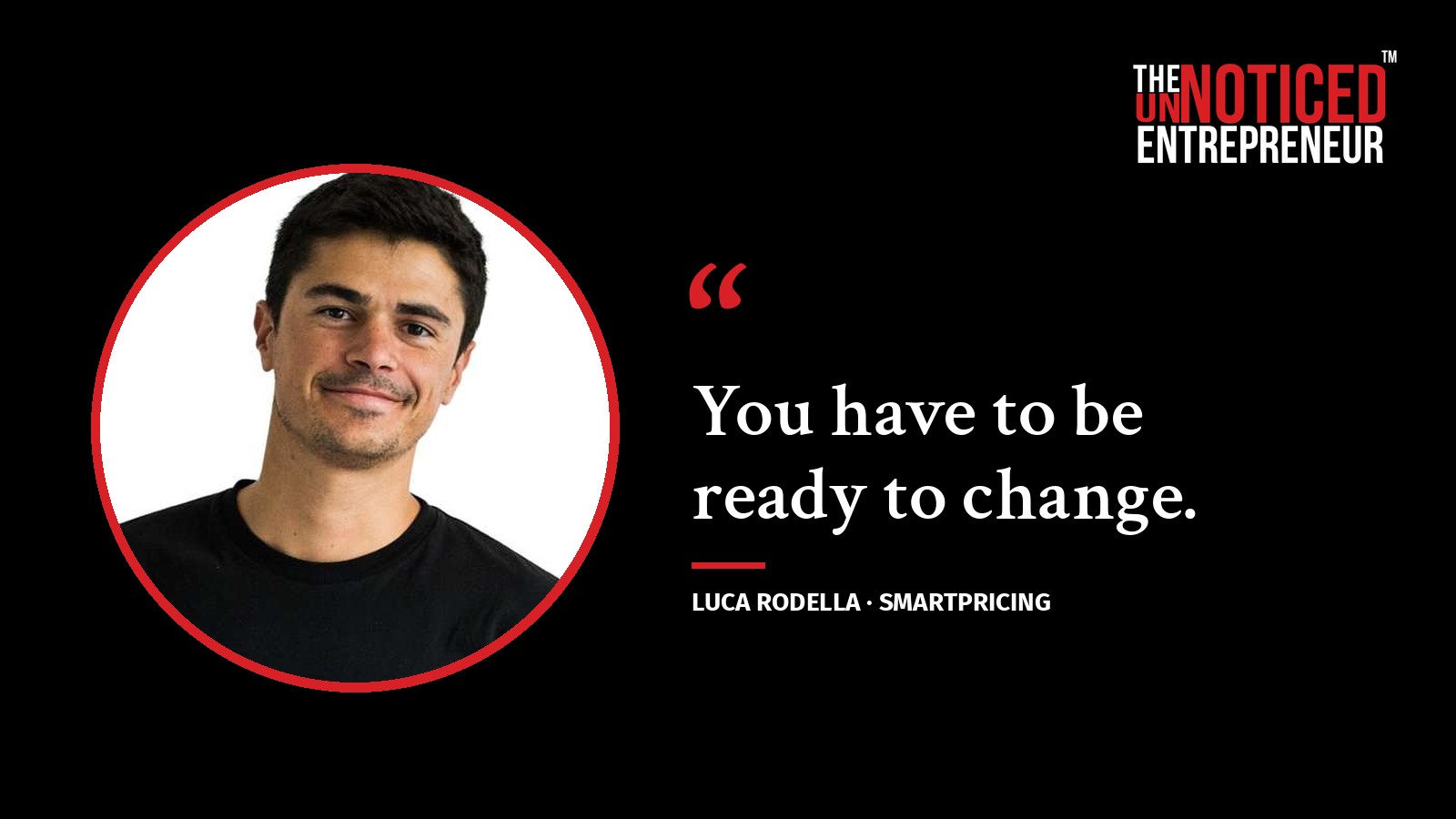
From The UnNoticed Entrepreneur archive: Jim James talks to Luca Rodella, co-founder of Smartpricing, in Italy. Published June 2023. Figures quoted are as Luca described them at the time.
In two minutes
- Smartpricing uses machine learning to set room prices automatically for small hotels and apartment owners, in real time.
- The founders were their own first customer: they ran a hotel business and had the problem themselves.
- They won trust with free onboarding and a no-risk trial, and grew one country at a time.
Listen to the episode
At the time of recording Smartpricing had over 2,000 clients, five offices across Europe and more than 100 staff. Luca said it had raised about €5 million in equity and €2.5 million in debt.
A name that does the work
They began with “a very bad name”. Then they found the Smartpricing domain was free in many European countries and took it. Everyone understands immediately what the company does.
Start with your own problem
Luca and his co-founders already ran a business managing hotels and apartments, so they were Smartpricing’s first client. That gave them credibility when pitching to hotel owners and, later, investors: “We went there and cleaned up rooms.”
To win the first customers, Luca’s advice is to meet people where they work, understand their day and their problems, and only then sell.
Overcoming the trust problem
Letting software set your prices means trusting it with your revenue. The biggest fear was that the algorithm would price too low or too high. Smartpricing’s answers:
- A free trial with free onboarding. “We believe in your hotel… you can try, and if you’re happy, you keep going.”
- Owners keep control. They can override any price. Fewer than 10% of prices are overridden, Luca says, and owners override less as trust grows.
- No data sharing between hotels. Data improves the algorithm, but it isn’t passed to competitors.
Dominate one country, then move
Unlike many software businesses, Smartpricing aims to become dominant in one country before entering the next. It started in Italy and expanded into German-speaking markets, using both outbound sales and inbound marketing, with content at the centre.
Employees as the brand
The company had nearly 20,000 LinkedIn followers, ten times its customer base. Luca credits staff profiles as much as the company page. Employer branding matters as much as customer marketing, because hiring is how you scale.
It’s not about ping-pong tables, he says. It’s culture: a “no jerks” rule, and mistakes genuinely allowed. When the culture is right, even scarce developers come to you.
What they’d do differently
They kept selling face to face for too long. Meeting owners in person was right at the start, but once they were scaling to many small businesses it became too expensive. “Be ready to change strategy.”
The investor pitch, in brief
- The leap: taking an industry that often isn’t even on the cloud straight to AI pricing.
- The numbers: acquisition cost, churn and other metrics.
- The founders: they’d lived the problem in their own business.
- The roadmap: what the product looks like now, and in 6, 12 and 24 months, and why the money is needed.
The business model: Smartpricing
- Customer: independent hotels, apartment complexes and other small lodging businesses, mainly in Italy and German-speaking Europe.
- Problem it solves: pricing rooms by guesswork or a fixed annual calendar.
- How it makes money: software-as-a-service subscription.
- How it wins customers: free trial with onboarding, content marketing and outbound sales.
- Role of AI: machine-learning models set prices automatically from the start.
- The pattern: solve your own operational problem, then sell the fix to the whole industry.
Lessons you can use
- Name it plainly. A name that says what you do saves explaining.
- Remove the risk of trying. Free onboarding builds trust fast.
- Keep the customer in control. An override button makes automation acceptable.
- Know when to stop doing things that don’t scale.
- Love your customers more than you watch competitors. Understand what they really need, not just what they say.
Try this this week
- Ask: what would make trying your product risk-free?
- Count how many of your followers come through staff profiles versus the company page.
- Write your pitch in four parts: the change, the numbers, why you, the roadmap.
Smartpricing: smartpricing.it



Leave a Reply